Smart Bulbs

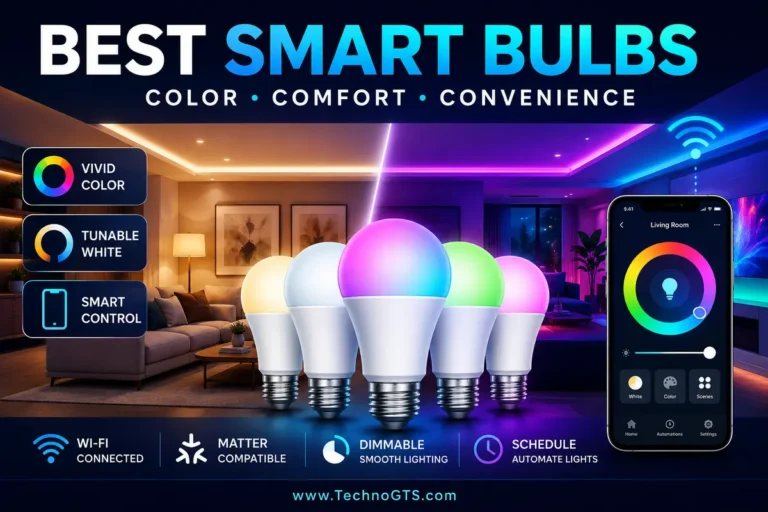
Smart bulbs bring app control, adjustable brightness, scheduling, and personalized lighting to compatible household fixtures. Depending on the model, users may choose warm or cool white tones, create colored scenes, simulate occupancy while away, or coordinate several lights as a group. These features can be useful in bedrooms, living areas, home offices, entertainment spaces, and entryways, but the correct bulb depends on much more than color selection.

Brightness should be compared in lumens rather than relying only on wattage-equivalent claims. Color temperature affects whether a room feels warm and relaxed or bright and task-focused, while color-rendering performance influences how accurately furniture, food, and skin tones appear. Buyers interested in hands-free operation should also confirm compatibility with their preferred smart speaker or smart display.

Home automation can make connected lighting more useful by linking it with schedules, household routines, or compatible smart sensors. A hallway light might respond to motion after dark, while bedroom lighting could gradually change before a morning alarm. Available routines depend on the selected ecosystem, internet connection, app, and whether processing occurs locally or through a cloud service.

Connection methods may include Wi-Fi, Bluetooth, Zigbee, or Thread, and some products require a separate bridge. Matter support can improve interoperability, but it does not guarantee that every platform will expose every feature. Although an E26 base is common in U.S. homes, shoppers still need to confirm bulb shape, base type, fixture size, indoor or outdoor rating, enclosed-fixture suitability, and dimmer compatibility before installation.

Replacing a bulb is not always the best way to make a light controllable. A suitable lamp or small lighting fixture may work better with a smart plug, while households planning several connected rooms may benefit from a compatible smart home hub. Our smart bulb buying guides examine brightness, white-tone range, color quality, connectivity, platform support, setup requirements, privacy controls, reliability, and long-term value so readers can build practical lighting without paying for effects or integrations they are unlikely to use.