Home Networking

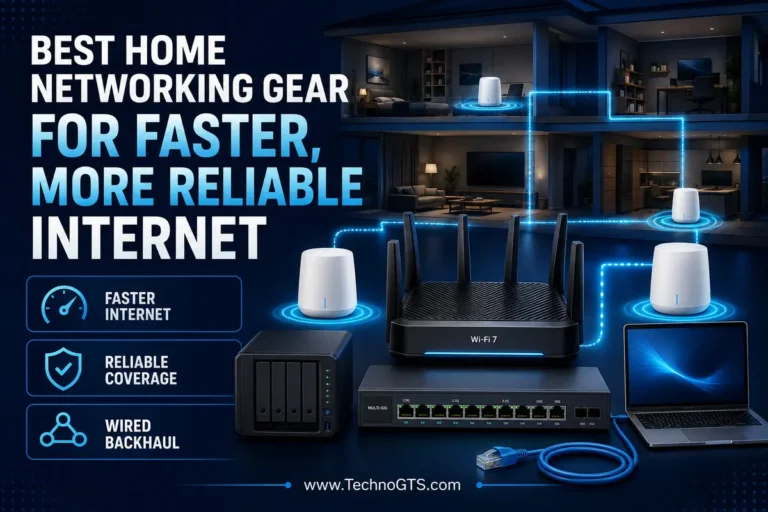
A dependable home network is a coordinated system rather than a single router with an impressive speed label. Internet service, modem or gateway, wireless coverage, Ethernet wiring, connected devices, and security settings all influence the experience. The broader Networking & Wi-Fi section covers each of these areas in greater depth.

Planning should begin with the property and the people using it. Consider the number of floors, building materials, internet-plan speed, device count, wired equipment, remote-work needs, gaming systems, smart-home products, and locations where reliable connectivity matters most. A small apartment and a large multi-story home rarely require the same equipment layout.

The router forms the center of many household networks. Readers replacing an older gateway or selecting their own equipment can explore Wi-Fi Routers. Larger spaces or difficult layouts may benefit from carefully positioned Mesh Wi-Fi nodes instead of relying on one powerful router.

A weak-signal area does not automatically mean the internet plan is too slow. Distance, walls, interference, channel use, and poor equipment placement may be responsible. When only a specific area needs additional coverage, compatible Wi-Fi Extenders may offer a targeted option, although placement and backhaul quality remain important.

Stationary devices can often benefit from wired connectivity. Desktops, televisions, game consoles, access points, and network storage may connect through Ethernet Switches when more LAN ports are required. Cable category, length, conductor construction, and installation environment can be researched under Ethernet Cables.

The network hardware inside a computer also matters. An older or unsuitable interface may limit the connection even when the router is performing correctly. Desktop and laptop upgrade options are covered under Network Adapters, including portable choices available through USB Wi-Fi Adapters.

Some households use cellular service as their main connection or as backup during a wired-service outage. Compatible 5G Routers should be evaluated according to carrier support, service plan, local signal, antenna options, and required Ethernet or Wi-Fi features. Regardless of connection type, owners should update device firmware, replace default administrative credentials, use supported security settings, and control guest or unfamiliar devices.

Inside this category, U.S. consumers can find buying guides, setup explanations, troubleshooting considerations, and practical comparisons for building or improving a household network. The coverage focuses on real requirements—usable coverage, dependable connections, compatible equipment, manageable controls, expansion options, and total cost—rather than treating advertised maximum speed as the only measure of network quality.

It seems we can’t find what you’re looking for. Perhaps searching can help.